Description
Advanced Cellular Migration & Soft Tissue Regeneration Peptide
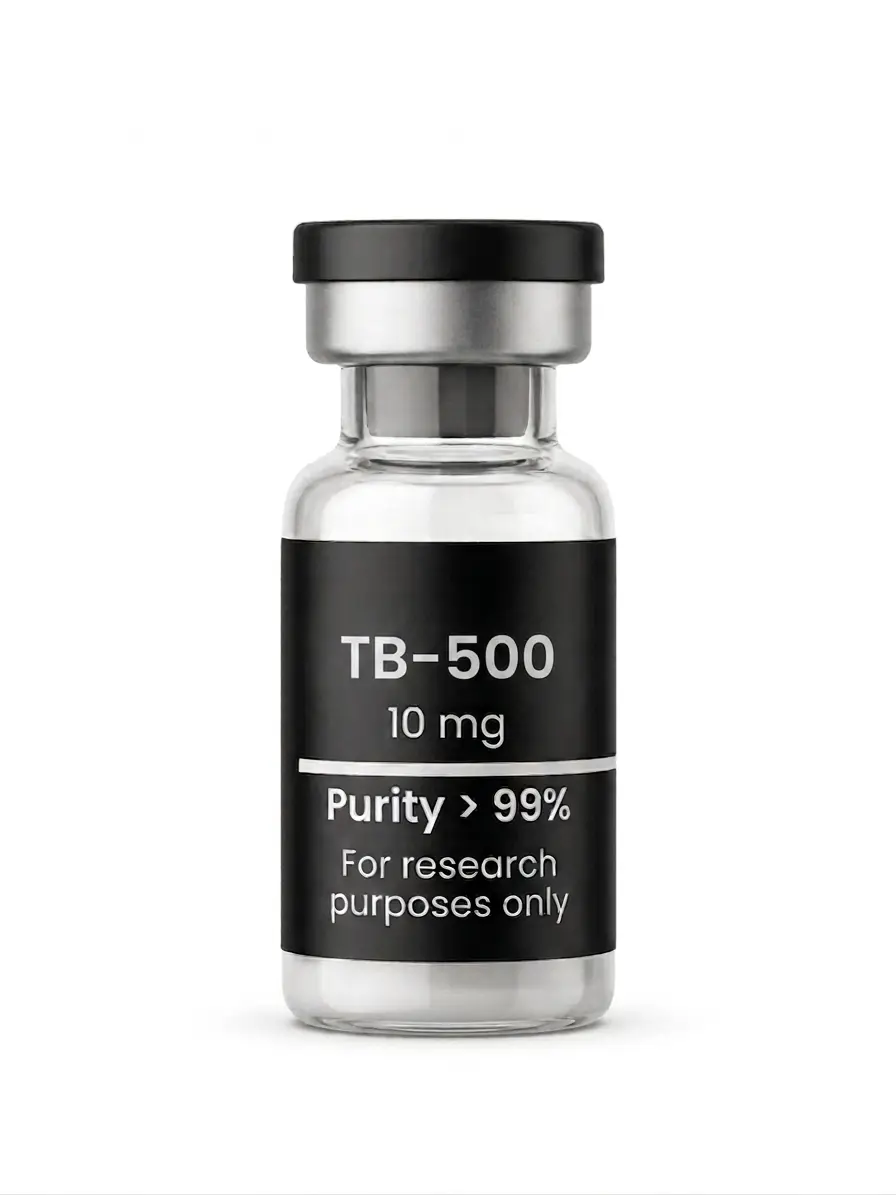
TB-500 is a synthetic fraction of a naturally occurring protein called Thymosin Beta-4, which is found in high concentrations in human and animal blood platelets. Composed of 7 amino acids, this short peptide chain represents the exact active region responsible for the parent protein’s legendary cellular repair, tissue recovery, and anti-inflammatory properties.
For researchers investigating muscle repair, tendon flexibility, endothelial cell movement, and advanced wound healing, TB-500 is a cornerstone compound for soft tissue regeneration studies.
Technical Specifications
- Sequence: Ac-Ser-Asp-Lys-Pro-Asp-Met-Ala (Active 7-amino acid fragment)
- Molecular Formula: C38H59N9O16S
- Molecular Weight: 929.98 g/mol
- Purity: ≥99% (HPLC verified)
- Appearance: Clean, white lyophilized powder
- Format: Lyophilized sterile powder
Core Research Mechanisms
Unlike structural proteins that stay fixed in place, TB-500 operates as a systemic signaling agent, traveling through cellular matrixes to actively drive the mechanics of physical repair:
- Actin Binding & Cell Migration: TB-500 directly regulates actin, a crucial protein responsible for a cell’s internal structural scaffolding. By binding to actin, the peptide acts as a catalyst for cellular migration, allowing healing cells to travel quickly to the exact site of an injury.
- Angiogenesis (New Capillary Growth): The compound stimulates the growth of new blood vessels from existing ones. This process quickly restores blood flow, oxygen, and nutrient delivery to slow-healing, low-vascularity tissues like ligaments, tendons, and cartilage.
- Dermal and Structural Collagen Deposition: TB-500 influences the behavior of keratinocytes and fibroblasts, ramping up the deposition of collagen to swiftly repair skin lesions, muscle tears, and structural tissue defects.
- Down-Regulation of Inflammatory Cytokines: It works on a cellular level to suppress toxic inflammatory markers, which drastically reduces local swelling and keeps scar tissue buildup to an absolute minimum.
Documented Research Applications
- Musculoskeletal and Tear Recovery: Extensively utilized in pre-clinical animal models to study the accelerated repair of strained muscles, torn ligaments, and joint capsule damage.
- Cardiovascular and Ischemic Research: Looked at closely in cardiac models to evaluate how thymosin fractions help protect and remodel heart tissue following oxidative stress or restricted blood flow.
- Systemic Healing Capacity: Because of its low molecular weight, TB-500 travels easily through tissues, allowing researchers to study systemic, full-body healing responses rather than just localized effects.
Storage & Handling
- Long-Term Storage: Store the lyophilized powder frozen at -20°C or colder to maintain maximum peptide stability. Keep protected from moisture and direct light.
- Reconstitution: Gently mix with Bacteriostatic Water. Because TB-500 is a delicate peptide chain, do not shake or agitate the vial aggressively after adding liquid—gently swirl until the powder disk is completely dissolved.
- Post-Reconstitution Storage: Once mixed, store the solution in a refrigerator between 2°C and 8°C. For maximum testing accuracy and consistency, use the reconstituted solution within 30 to 45 days.
FOR LABORATORY RESEARCH USE ONLY: This compound is strictly intended for in vitro and in vivo laboratory research and cellular evaluation. It is not approved for human consumption, therapeutic use, or clinical prescription.



Reviews
There are no reviews yet.